

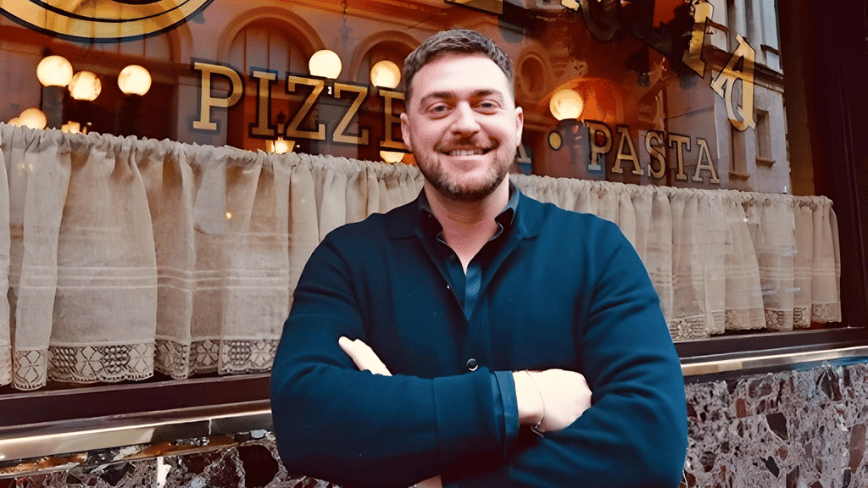
The hospitality industry has always thrived on human interaction, but the systems supporting these interactions are continuously evolving. Arran Campolucci-Bordi, the owner of Casa Italia in Liverpool, traces this evolution from traditional handwritten reservation books to modern digital booking and AI-driven operations. He believes that each transition reflects a significant shift in how restaurants handle time management, communication, and customer expectations.
Historically, hospitality relied heavily on manual processes. Reservations were noted by hand, availability was checked manually, and customer inquiries were addressed individually. The advent of digital tools introduced greater structure and consistency, moving many of these tasks online. According to Arran, the current wave of technology incorporates AI, which can respond to customer needs dynamically, minimizing the need for human input.
Arran asserts that AI in hospitality should be viewed as an operational support tool rather than a human replacement. He illustrates this with the example of Ayra, an AI system designed to function like a trained staff member in specific scenarios, particularly in managing information. Once equipped with details such as menus, booking systems, and policies, Ayra can interact with customers conversationally, handling tasks like checking availability, managing reservations, and answering common queries in real time. This capability allows staff to concentrate on more critical areas of service.
Recent reports indicate that 58% of employees utilizing AI tools report saving significant time at work, averaging about 52 minutes daily or nearly five hours weekly. In hospitality, where substantial time is spent addressing inquiries and managing bookings, these savings can notably impact team productivity and focus.
Arran emphasizes that AI systems are intended to complement existing teams, relieving staff of repetitive administrative tasks that detract from direct customer engagement. By reallocating time towards more meaningful interactions, restaurants can enhance service delivery. “By shifting those tasks to an AI-driven interface, businesses can allow staff to focus on delivering service within the physical environment of the restaurant,” he explains. This alignment allows employees to engage in tasks that require attention, awareness, and interaction.
The practical implications of incorporating AI are evident in how restaurants manage their time and resources. Arran notes that much operational inefficiency arises from fragmented communication, especially when customers pose similar questions or booking requests. “Each individual interaction may be brief, but collectively they represent a substantial time commitment,” he points out. Ayra’s capacity to manage these interactions around the clock increases the time available for staff to engage with customers, capturing previously missed opportunities.
This shift reflects changing customer behavior. Arran observes, “As digital communication has become more immediate, expectations around response times have shifted accordingly.” Customers now anticipate quick and accurate responses, whether they are making reservations or inquiring about menu options. Instantaneous response systems help meet these expectations while ensuring clarity and consistency in communication.
Despite the perception that hospitality is slow to embrace new technology, Arran argues that the industry’s hesitation often stems from a lack of proper vetting of the technologies they adopt. He stresses the importance of simplicity in the adoption process. Many restaurant owners are not resistant to technology but are uncertain about its practical applications. His platform is designed to be robust yet straightforward, requiring minimal information to train the AI agent, which can then operate autonomously.
This approach signifies a broader trend in technology integration within traditional sectors. Rather than demanding fundamental operational changes, tools are being developed to fit seamlessly within existing structures. Arran believes this compatibility is crucial for long-term adoption, especially in industries where consistency is vital.
Looking forward, Arran envisions AI as part of an ongoing progression rather than a final destination. The transition from manual to digital systems has already transformed hospitality operations, and the introduction of AI marks yet another phase in this evolution. Each stage has brought about new efficiencies while maintaining the core goal of effective customer service.
“People come into a restaurant for the experience, and that will always be the case,” Arran concludes. “If technology can take care of everything around that, it allows the staff to focus on what they do best, giving customers the best possible experience.”